Happy Thanksgiving!

A Day to Give Thanks.

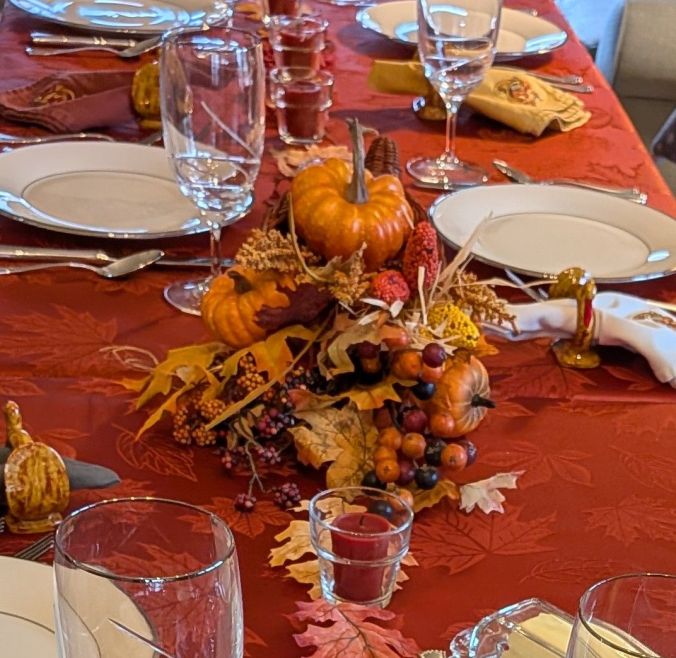
The table is set and the turkey is roasting, and soon hungry family members will arrive. I love this day. There are so many things I’m thankful for.

I love that I live in a country that was dedicated to God. When English colonists arrived in Jamestown in 1607, they erected a cross on the beach and dedicated this land to God. George Washington prayed in Saint Paul’s Chapel for hours asking for God’s help and guidance during the struggle to unite the colonies and defeat Britain. He was known by some as the kneeling general. It’s interesting that Saint Paul’s Chapel was spared from destruction on 9/11 since it sits only 100 yards from the Twin Towers. People of faith are the foundation of our nation. I’m thankful to live in America.

I am always thankful for my family and friends and this year I’ve really noticed kindness in my neighborhood. We help our neighbors with their yard work, but other neighbors help in the winter by shoveling the older neighbors’ driveways and walks. One neighbor is battling cancer and food is taken to the family and transportation is provided to get him to the doctors. I like to think that once the helping began, others noticed and joined in.

Tomorrow these come down and Christmas decorations go up. Many in the neighborhood have already finished their decorating. They were smart to take advantage of the warm temperatures we had. Scarecrows, pumpkins and turkeys say Thanksgiving to me, but I’m ready to move on to Christmas. Wishing you all a very Happy Thanksgiving!

Scarecrow Season

This scarecrow isn’t scary, unlike those used by farmers in the past.

Scarecrows have been used for around 3,000 years. The Egyptians used them to protect their wheat from quail and put tunics on reeds close to the Nile to look like men. In Greece, wooden statues of their Gods were placed in fields and Romans copied this idea with Roman Gods. It’s interesting that Japanese farmers also dressed structures with coats and hats to protect their rice fields. This proves that a good idea is hard to keep quiet.

Children were used in the fields of Europe to scare the birds. They would run, scream and throw rocks to deter the hungry predators. Romans brought the idea of scarecrows to Europe and children were replaced with men made of straw and gourd heads. The use of scarecrows continued until pesticides became popular after WWII. Today they are mostly decorative, but some still use them. It’s fun to read how smart the birds were in getting used to tin pans and blowing cloth that was attached to the scarecrows. Apparently, it didn’t take long before the birds were eating again. Kind of like my deer deterrents. They get used to the smell of the spray and come back for a nibble!

Ohio loves the scarecrows so much they have a Scarecrow Festival in Washington Court House and a Trail of Scarecrows throughout Fairfield County. There are 300 scarecrows scattered through 14 communities in the county. It would take time to find all of them, but driving in that beautiful area would be fun for an hour or two. Of course a stop for lunch would be necessary!

I have a couple scarecrows, and I love their silly faces. They make me smile! So, if you need to smile, buy a scarecrow!

Cake Walks still exist!

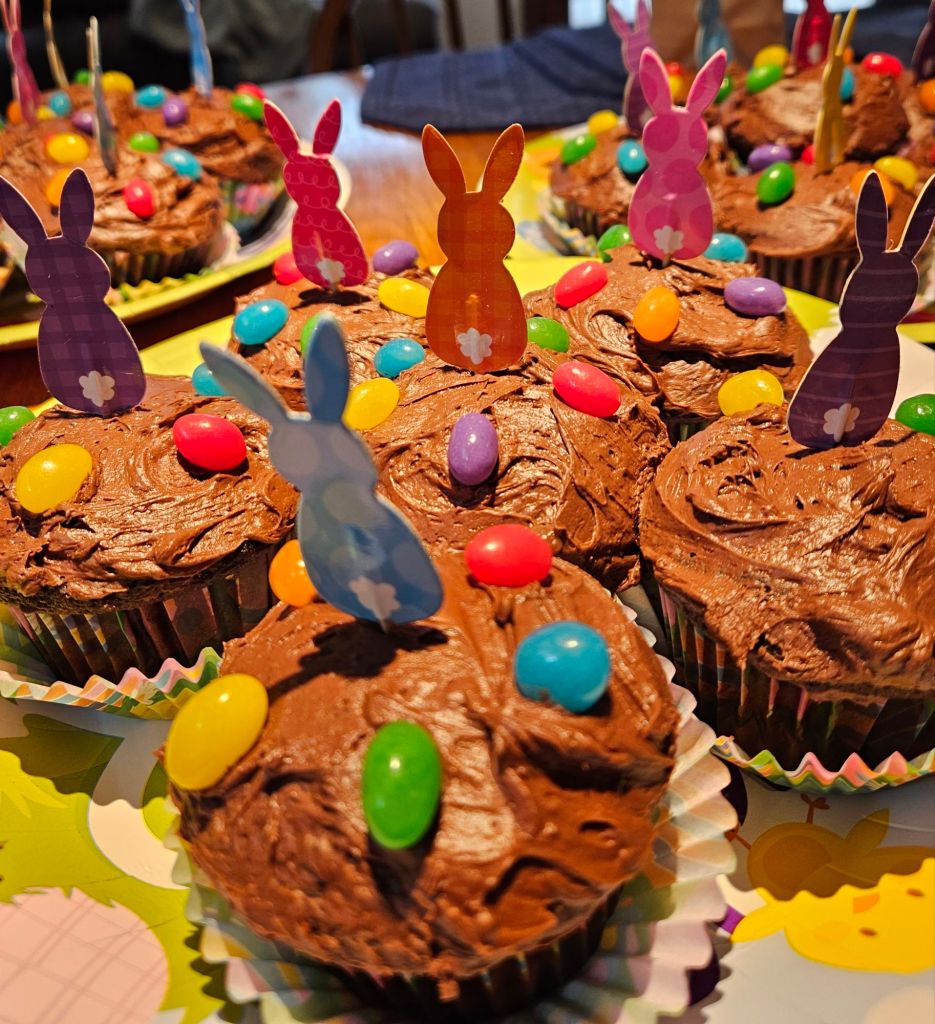
Kids receive cupcakes instead of an entire cake as their cake walk prize.

Cake walks have changed since they originated on slave plantations. Participants no long prance in a square formation but walk around in a circle. These cupcakes will be given to the child who is standing on the right number when the music stops. A lot of fun and sugar will be consumed at the church’s annual Easter egg hunt today.

I found the history of the cake walk fascinating. It was originally called the prize walk and slave owners judged the dancing. Couples stood with the men in the inside of the square and apparently imitated their white master’s movements. The men’s movements consisted of haughtily tipped heads and high prancing legs while the women were judged on their grace. The prize was an elaborately decorated cake and from what I read, the slave owners didn’t see themselves in the men’s movements.

In the late 1800’s, minstrel shows featured the cakewalk. The dancers were always men and even the black participants wore black face. The cake walk became so popular that in 1897 a national competition was held at New York’s Madison Square Gardens. It’s not surprising that music was affected by the cake walk movements and it is believed to have influenced ragtime music. Scott Joplin mentioned the cake walk in his song The Ragtime Dance. When minstrel shows lost popularity to vaudeville, the cake walks moved to carnivals.

I remember cake walks as a fund raiser when I was in school. Everyone was excited about winning a cake even if you had a mother who baked. I never won one but it was always fun. The history of the cake walk makes me appreciate the custom even more.

Molasses is not just for Baking!

Cookie baking is all year round for me, but autumn calls for molasses cookies.

I grew up in a family of bakers and their recipes have become mine, but some how mine don’t taste the way I remember. That is true of my Aunt Hazel’s molasses cookies. I recently tried a new soft molasses cookie and I think I’ll go back to my aunt’s.

I learned in history class about the importance of molasses in the triangle trade. Slaves were brought from Africa to the sugar cane plantations in the Caribbean. The molasses made from the sugar was shipped to New England to make rum. The rum was taken to West Africa and was used to purchase slaves. What I didn’t know was that molasses was the primary sweetener in America until the early 1900s when the price of refined sugar dropped. That bit of information helped me understand the importance of molasses outside of rum production.

Molasses is made from sugar cane and sugar beets. Sugar cane produces the sweetest sugar and is used for cooking and baking. Sugar beet molasses is used in animal food. It provides protein and minerals for beef and dairy cattle. Molasses is also used in the production of yeast. (Who knew?) A strange use of molasses is its use on gravel roads for dust control. It’s a natural product and because it’s sticky it really works. I wonder about it getting on the cars. I wouldn’t want to scrape molasses off my car.

I learned that if I’m out of brown sugar I can add one tablespoon of molasses to a cup of granulated sugar. Want dark brown sugar? Add two tablespoons. It sounds like I’d have a gummy mess, but I might try it just to see if it works. Many of my cookie recipes call for brown sugar because it brings a nice taste that granulated sugar doesn’t. The darker the sugar the better the taste. I can’t verify that, but it makes sense.

Hope you all are enjoying the fall temperatures and beautiful blue skies. A cup of cider and a couple cookies makes the day even better! My favorite cookie is oatmeal raisin, and they are made with brown sugar.

Confederate Soldiers Remembered

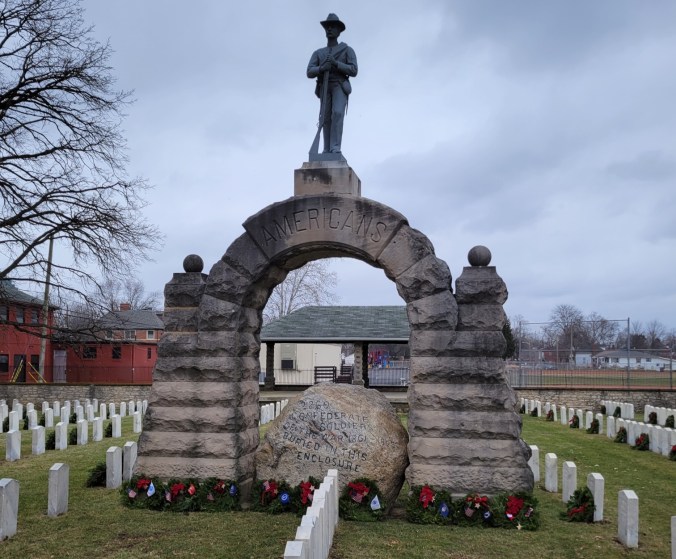
Camp Chase is a Confederate Cemetery in Columbus, Ohio.

I’ve lived in Columbus, Ohio, most of my life and had never been to Camp Chase until this past December. I was part of a group who laid wreaths on the soldiers’ graves. There are over 2000 men buried there. Not every grave received a wreath but many did. At each grave the man’s name was said aloud and then we were asked to say something just for the person. I said a prayer. It was a very meaningful experience.

Camp Chase was a park that became a recruiting station and training grounds. It then became a prisoner of war camp that was over crowded and filled with disease. At one time it held 8,00 prisoners. After the war some soldiers bodies were taken home but most were left. The federal government bought the land in 1886 and built a wall around the two acres to protect the graves. In 1893, a former union soldier, William Knauss, saw the condition of the graves and went to work cleaning the cemetery and held a memorial service in 1895. In 1908, the wooden headboards were replaced with marble headstones.

You’ll notice the headstones come to a point. I read this was because the Confederate soldiers didn’t want a Yankee to sit on their grave. It could also be it was a way to distinguish the Confederate graves from the Yankees.

The word Americans is written on the top of the arch in the top photo. That is significant in that these men were not treated as the enemy or as traitors. They were honored as Americans. It is also significant that a Union soldier spearheaded the project to maintain a Confederate cemetery. I remember going to a little country cemetery as a little girl and was shown the graves of two family members who had died in the Civil War. One had fought for the North and the other the South. They were buried together in the family plot. They were family and those who fought against each other were all Americans.

Happy Halloween!

I continue to learn more Halloween history every year.

For many of us, Halloween is a fun holiday filled with costumes and candy, but it began as a harvest and new year festival called Samhain. The Celtic people also used this day to talk with their ancestors and to ask for guidance in the new year. They made bonfires and wore masks to ward off evil spirits that might have crossed over on this night. The Irish immigrants brought Halloween to America and discovered pumpkins made a much better lantern for their jack o lanterns than turnips. Unfortunately, some turned a harvest festival into something evil by performing satanic rituals and welcoming demons. That is truly scary!

Tonight children will carry bags and receive packaged candy. Prior to the 1950s, homemade treats and coins were given to the trick or treaters. Caramel apples, popcorn balls and cookies were popular treats. Candy corn was one of the first manufactured candies and was called chicken feed. The Goelitz Confectionery Company sold the boxes with a rooster on it in1880 and people are still enjoying these sugary pieces of corn.

Dressing in costumes and performing tricks or giving the treat of song was called mumming or guising prior to Christianity in the Celtic countries. Children had to earn their treat. After Christianity replaced paganism, children went souling and agreed to pray for deceased loved ones in exchange for a small biscuit or piece of bread.

People around the world celebrate Halloween. Ireland is the country where it originated and in addition to costumes and trick or treating, they eat barmbrack cake. This is a bread filled with fruit and surprises inside. These little surprises carry a meaning for the person. For example, finding a ring means a wedding in the coming year. In Scotland, sausage is eaten on Halloween and is known as their traditional Samhain food. I think candy is America’s traditional Halloween food!

I love seeing the costumes children choose and every year I still see witches, vampires, and ghosts. I just read they are still in the top five costumes. It’ll be a fun night if the rain holds off. Happy Halloween everyone!

Sin Eaters

Sin Eaters were believed to be able to receive the sin of the deceased.

From the 1600’s to the early 1900’s in the British Isles Sin Eaters were paid to attend a funeral and eat bread that was placed on the deceased and then ingest the person’s sins. Immigrants carried this practice to America and it is believed to have continued until the 1930s in Appalachia. The question one might ask is why?

The Catholic Church had taught the people that sin was absolved after a person confessed and asked for forgiveness. If someone died before having the opportunity to confess his/her sins, the family hired a Sin Eater to accept the deceased’s sins. However, the Catholic Church called these people (both those who did the hiring and the Sin Eater) heretics and blasphemers. The crime of sin eating was punishable by death. The practice comforted the living and it grew to include those whose deaths were not sudden. It also continued because it was believed that the Sin Eaters prevented souls from lingering on earth as ghosts.

Sin Eaters were useful society outcasts. No one would associate with them and they lived outside the villages. People believed they worked for Satan. After all, they willingly accepted the sins of many so they were overflowing with sin.

We are approaching Halloween and remember that people wore masks at this time so evil spirits wouldn’t recognize them or maybe be scared away. People also gave treats to those who promised to pray for a family’s deceased loved ones on Beggar’s Night. Going to heaven was very important to the people. I’m not sure how many people are concerned with that today.

Weedflower

The book Weedflower tells the story of a Japanese internment camp in Arizona.

Weedflower was written by Cynthia Kadohata and my students and I read this when I was teaching. At that time, I had no idea I would share two granddaughters with their Japanese grandmother. I recently bought the book for my granddaughters and thought I’d share some of the things I learned from researching Japanese Internment Camps.

Ten internment camps housed 120,000 Japanese who were removed from the west coast of America shortly after the bombing of Pearl Harbor. Transports began in February 1942. There were ten camps in the following states: California, Montana, Arkansas, Colorado, Idaho, Wyoming, Utah and Arizona. The camp in Poston, Arizona, was built on a Native American reservation. This was the setting of Weedflower.

The book is written through the experience of a young girl, Sumiko, and is historically correct. The Native Americans did not want the camp and resented the camp having electricity and running water. The Japanese people were fearful of the Native Americans and believed they were savages because of the stories they had heard. Sumiko developed a friendship with a Mohave boy and a Romeo and Juliet story unfolds.

Interesting things I learned from my research: Canada sent 24,000 to 26 Japanese internment camps. Mexico also had internment camps and zones of confinement. As a result of the Japanese workers digging irrigation canals, Poston, Arizona, became an agricultural center. Men were allowed to enlist in the army and fight in Europe during WW II and 33,000 Japanese Americans did. The 442nd Regimental Combat Team was composed almost entirely of second generation American soldiers of Japanese descent (Nisei) and is known as the most decorated unit in US military history.

Why is the book called Weedflower? Sumiko’s family grew and sold carnations, but she loved the weedflowers best and took the seed to the desert where they grew. I have no idea what it is, but I took a picture of a weedflower growing in an area where grass is struggling to survive. It’s my weedflower, but unlike Sumiko’s, it doesn’t have a scent.

Granny Witch to Role Model!

Mother’s day has been celebrated in America since 1914.

Every time I smell fried chicken I think of my grandmother. She was a hard working farmer’s wife who cooked a huge noon meal every day for my grandfather and uncles who worked the farm. Endless chores filled her day and I believe my work ethic was influenced by her. “Take time to do it right. If it’s worth doing, do it right. Finish one job before starting another.” These are all sayings I grew up hearing.

A friend of ours asked his university freshmen students who their role model was growing up. He said that 20% of the students said their grandmother and that was followed by a parent or a teacher. That led me to doing a little research on grandmas.

I had never heard of Granny Witches, but am familiar with herbal medicine. Appalachian grandmas became known as Granny Witches because they used plants, prayer, and wisdom in treating people. German, Scottish and Irish traditions for healing came to America with the first settlers and they learned more about plants from the Native Americans. This knowledge was needed since doctors were scarce. Religion came with the settlers and Bibles were regularly read and church was attended. Superstitions about the grannies’ abilities were not erased by attending church. Grannies believed in prayer and superstitions.

A part of a girl’s education was identifying plants. Women passed their knowledge from one generation to the next and were able to find water with a forked stick, treat ailments with herbs and deliver babies. Grannies quoted scripture, read tea leaves, and gave advice. The importance of the Granny Witches in the communities can’t be emphasized enough.

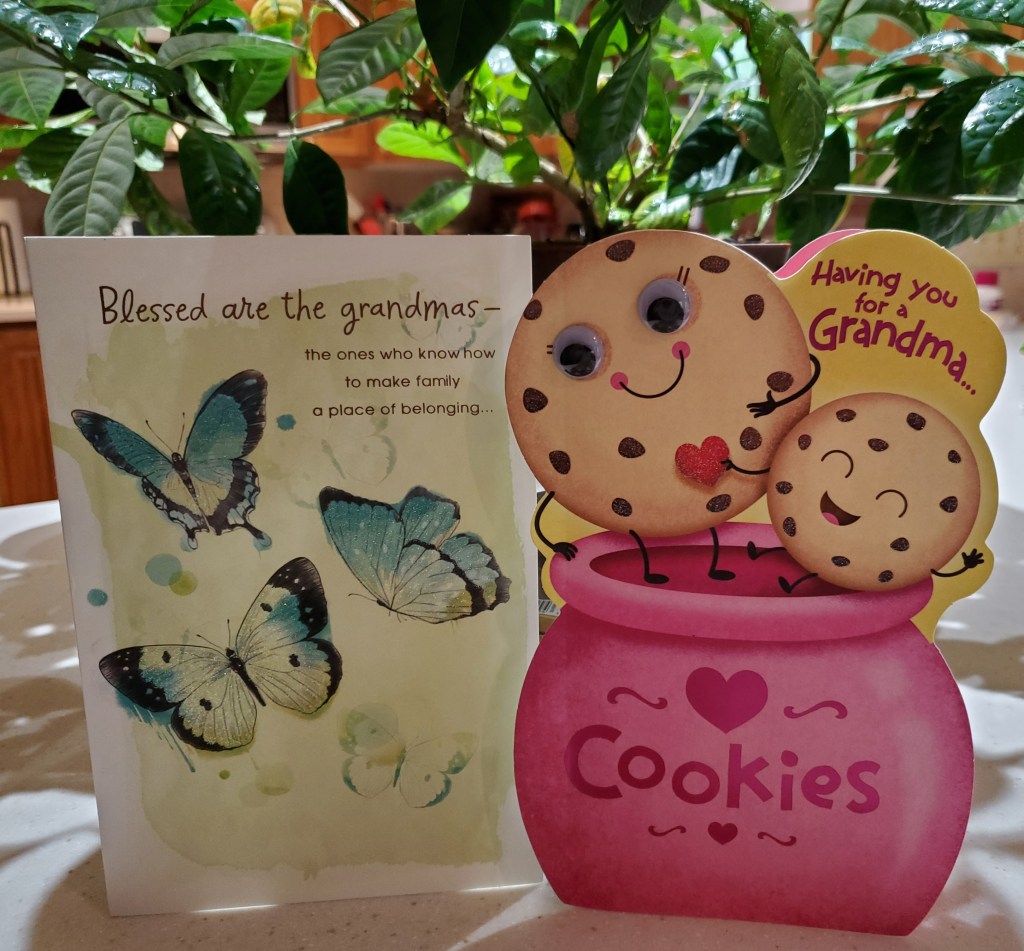
Today many grandmas receive gifts and cards. I recently taught my 13 year old granddaughter how to make a lemon meringue pie. She appreciated the help, but she gave me a gift by asking me to teach her.

Happy Mother’s Day!

April Foolery!

April in Ohio makes the entire month subject to unwanted surprises.

This picture was from April 21, 2021, so it wasn’t nature playing an April Fools’ Day joke. In Ohio, any day in April can reveal a joke played by nature. I remember one Good Friday in April when my children made a giant Easter Bunny from the snow. I wish nature would agree with me and not allow snow after March 1. I’m perfectly happy with it December through February, but when March arrives I want spring.

Historians aren’t sure of the origin of April’s Fools’, but some suggest it began in 1582 when the calendar was switched from the Julian to the Gregorian calendar. It took awhile for people to hear that the new year was to begin on January 1 instead of April 1. These poor uninformed people were called April Fools.

I have never been a fan of practical jokes which are performed on April 1. I remember both as a child and as a teacher seeing signs stuck on someone’s back. These were not words of praise. There were many acts of meanness performed and it made the day miserable. What would have been nice was to see people surprising others with a compliment, a candy bar, an invitation or for me a flower.

The other problem I have with this day was the person humiliated or hurt wasn’t allowed to be upset because it was just an April Fool’s joke and that was expected on this day. They were to laugh it off. I don’t agree. There is no day that should encourage people to embarrass or harm another.

I have come to accept nature’s jokes, but I can’t accept cruel acts. Why ruin a person’s day when you could do something to make them happy?